The Monday retention loop
A light weekly rhythm so Sunday’s teaching doesn’t disappear by Thursday—built for teachers, groups, and anyone who wants learning to last.
If church education evaporates by Monday, the answer isn’t a guilt trip. It’s a loop.
A loop is small on purpose. If it only works on your most organized weeks, it’s not a loop—it’s a fantasy.
Here’s a Monday retention loop you can run after a sermon, a class, or a group. Steal it. Shrink it. The win is return, not aesthetics.
Why Monday matters
Monday is when the gathering’s clarity meets the week’s chaos.
If nothing from Sunday gets a second look early, the week will decide for you. By Thursday you’re left with a feeling. Feelings fade. Texts and notes can be reopened.
Learning science keeps circling the same finding: retrieving what you heard beats rereading a highlight once.1 The church already has a weekly rhythm. We just underuse the days after.
The loop (four moves)
1. Capture (Sunday night or Monday morning) — 5 minutes
Open a note linked to the passage.
Write:
- The reference
- One sentence you don’t want to lose
- One question still open
That’s capture. Not a journal entry. Not a transcript.
2. Retrieve (Monday or Tuesday) — 3 minutes
Without looking at your note, try to say the one sentence aloud. Then check.
If you blanked, good—you just found the edge of the trail. Look once. Close it again.
3. Relocate (midweek) — 5–10 minutes
Put the sentence somewhere your week actually happens:
- A calendar nudge
- A text to a friend or group thread
- A sticky note on a mirror (yes, really)
- A reread of the same five verses on the train
Relocate means the learning touches ordinary life, not only the study corner.
4. Re-enter (before next gathering) — 5 minutes
Open last week’s note before you take in something new. Ask: What am I carrying forward?
Teachers and group leaders: this is also when you update the “so far” line for your people.
Loops for different roles
- Personal listenerCapture + retrieve is enough most weeks.
- TeacherCapture includes what the room wrestled with, not only your outline. Your lesson trail feeds the loop.
- Group leaderRelocate can be a single midweek question to the group—one question, not a worksheet.
- Church staff teamShare the series aim sentence in writing. Don’t make every leader reverse-engineer the trail from memory.
What to refuse
Refuse loops that require:
- A perfect morning routine
- New software every quarter
- Printing packets for people who won’t use them
- Spiritual scorekeeping
If the loop becomes a performance, people will quit—and they’ll be right.
A note on tools
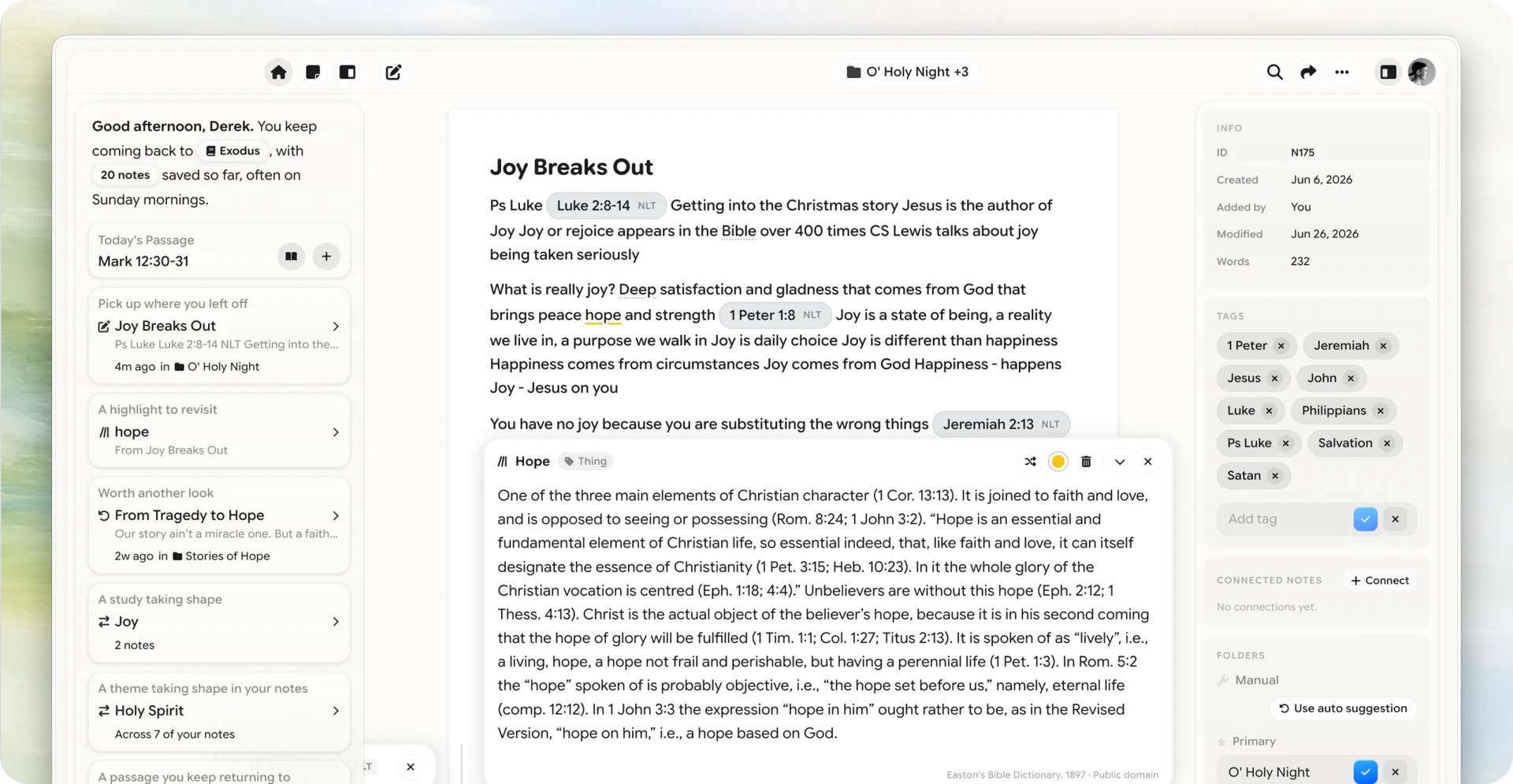
Use whatever you’ll actually open. A notes hub linked to Scripture helps because Monday-you can find Sunday-you by the passage, not by a filename you invented while tired.
Keep your Bible app. Add a place for the trail. That’s the whole product idea behind Harvous, and it’s why daily readers and teachers end up needing the same primitive: notes that stay attached to the text.
Run it for three Mondays
Don’t judge the loop after one messy week. Run capture → retrieve → relocate → re-enter three times.
Then ask: Did anything from Sunday still have edges on Thursday?
If yes, keep going. If not, shrink the loop until it fits your real life.
Learning that isn’t kept isn’t learning for long. Monday is where keeping begins.
Footnotes
-
Practice testing and spaced practice are among the strongest classroom-ready techniques in learning research — see this APA teacher-ready review (PDF). ↩