What Proverbs 25:2 taught me about studying well
The verse Harvous is named after — and why it keeps coming back to me.
“It is the glory of God to conceal a matter; to search out a matter is the glory of kings.”
That’s Proverbs 25:2. It’s where the name Harvous comes from — a distortion of “harvest,” shaped by the idea of searching out what’s been hidden and bringing it in.
I came across this verse a few years into studying the Bible seriously, and something about it changed how I thought about what studying actually is.
There’s a theology embedded in this proverb that I find genuinely surprising. It says concealment is God’s glory. Not withholding — glory. The idea being that hidden things have weight. That not everything is meant to be immediate. That some understanding is earned slowly, by people willing to look.
And then the other half: searching out a matter is the glory of kings.
Solomon’s court had actual monarchs in mind here — rulers investigating matters of state (see the cluster of court sayings around it in Proverbs 25). I’m not claiming every believer is a king, and I’m not hanging a whole product theology on one verse. But the pattern it names — responsibility joined to patient inquiry as dignified work, not menial busywork — is one I think reasonably stretches to anyone doing the work of studying Scripture.
One implication I draw is that searching is dignified work. That coming back to a passage you half-understood and sitting with it until something opens up is itself a form of faithfulness. That the effort of studying is part of the point, not an obstacle to it.
I’ve thought about this a lot in the context of building Harvous.
There’s a version of Bible study software that tries to do the work for you — AI summaries, automated commentary, pre-written devotionals. I understand the appeal. But I don’t think it fits the shape of what Proverbs 25:2 is describing. The unofficial rules for AI apps for Christians put a similar humility in plain language: tools shouldn’t replace the searching that belongs to people.
The passage doesn’t say the concealed matter gets delivered to you. It says it gets searched out. The searching is where the glory lives.
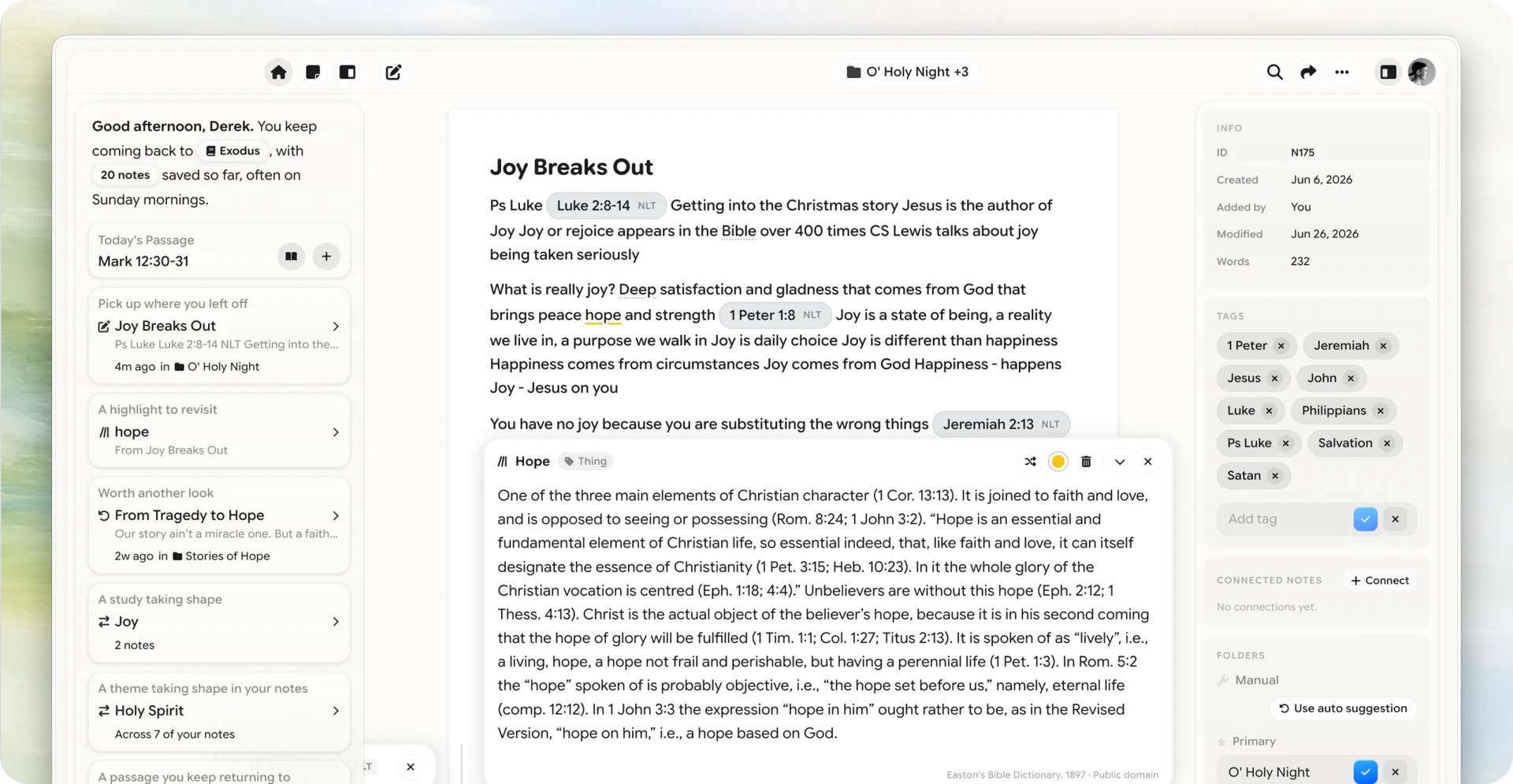
What a tool can do is make searching sustainable. Help you keep the things you find. Surface them when they’re relevant again. Let you build understanding over time instead of starting from scratch every few months. That’s a different kind of help — it serves the searching rather than replacing it.
I named this thing Harvous because the idea of harvesting your own study — gathering what you’ve actually found rather than what someone else found — felt right to me.
The work is yours. The search is yours. The notes are yours.
What I’m trying to build is just a place to put what you find.