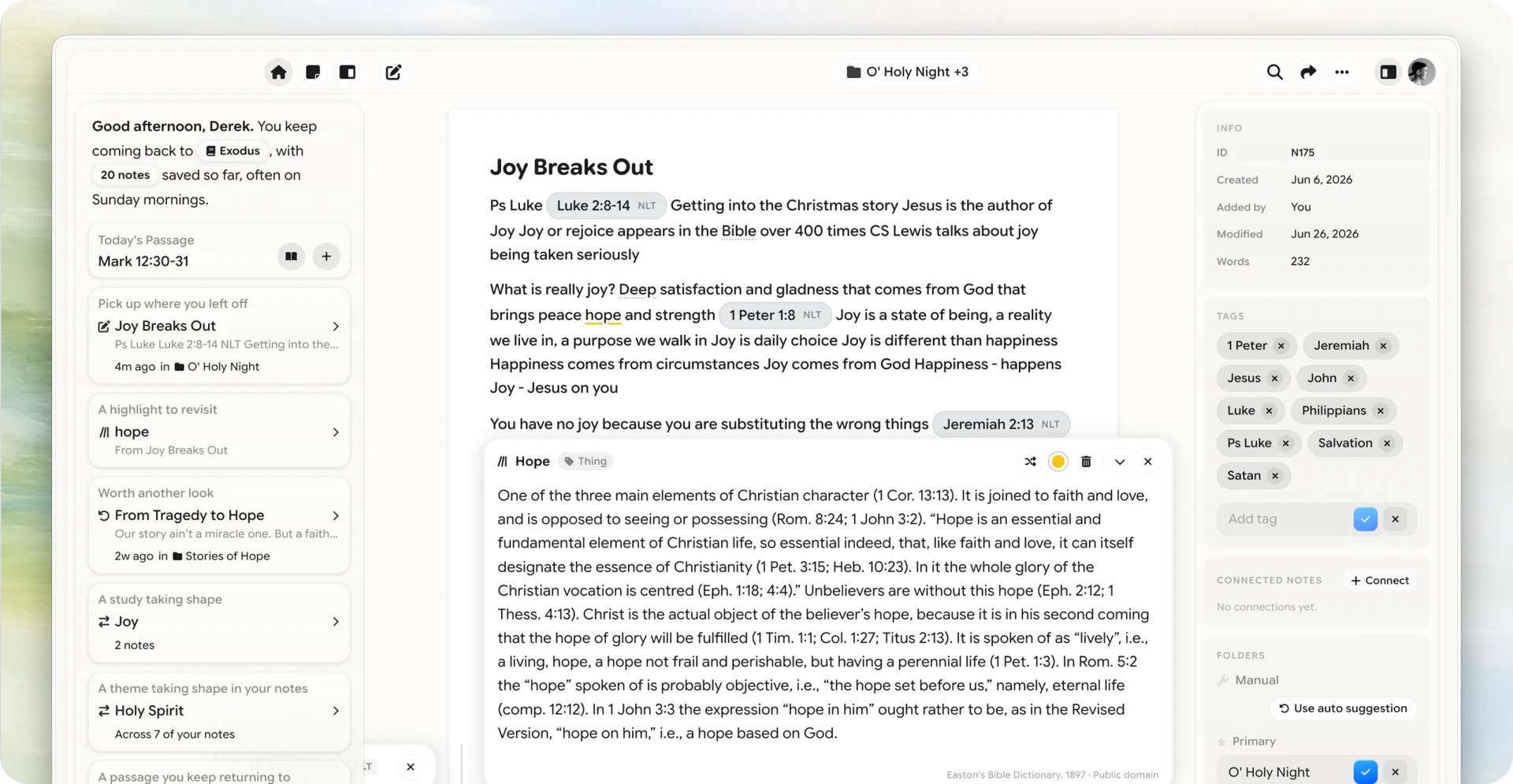
From sermon series to small-group follow-up
How to turn Sunday’s preaching into a midweek conversation that continues the same trail—without becoming a second sermon.
A sermon series can be one of the best gifts a church gives its people: a shared text, a shared season, a shared vocabulary.
Then small group happens, and the gift gets awkward.
Either the group tries to recreate the sermon (and nobody can), or they ignore the sermon entirely and open a random question sheet that lives in a parallel universe.
There’s a third way: follow the same trail without repeating the same talk.
What follow-up is for
Midweek follow-up is not:
- A quiz on whether people were listening
- A chance for the leader to preach the sequel
- A complaint session about the pastor’s illustrations
It is:
- Space to retrieve what was heard
- Space to ask the questions the sanctuary didn’t have time for
- Space to apply the text in a room where people know each other’s actual weeks
If Sunday was exposure, midweek can be return. That rhythm matches what we know about how learning lasts—people remember what they practice retrieving, not only what they once heard.1
Build a bridge note
Before group, the leader needs one short bridge note:
- Passage (the sermon text, with verses)
- Series aim this week (one sentence—borrow from the preacher if published, or write your best honest summary)
- Two questions (one “what did you hear?” / one “where does this meet us?”)
- One open edge (what felt unfinished, tense, or worth more time)
That’s enough. If you bring a three-page reprint of the sermon outline, you’ll teach it again. If you bring nothing, you’ll drift.
Sunday note-takers already know this pain from the other side—thoughts that were vivid at 11:15 and gone by Monday. (Sunday note-takers is for that personal trail.) Group leaders need the communal version.
A simple midweek shape
Arrive (5) — People land. Don’t start with intensity.
Retrieve (10) — “What do you remember from Sunday’s passage—without looking?” Let it be incomplete. Incomplete is the point; you’re waking the trail.
Re-open the text (15–20) — Read the passage again aloud. Slow. Ask what people notice now that they didn’t notice then.
Honest edges (15–20) — Use your two questions. Leave air. Don’t rush to tidy answers.
Carry (5) — One sentence to keep this week. Optional: one verse to reread before next Sunday.
You’re not covering the preacher’s outline. You’re helping the body keep walking the same path.
When people miss the sermon
They will miss Sundays. Plan for it without making them feel punished.
- Keep the bridge note linked to the passage so absentees can still enter via the text
- Offer a 60-second “so far in the series”—not a recap of every illustration
- Invite absentees to listen later if the church posts audio, but don’t make the group wait on a download
The text remains the center. The sermon remains a gift. The group remains a place for people, not perfect attendance records.
Pastors and leaders as partners
If you preach: consider publishing a one-sentence weekly aim and the primary text for group leaders. That’s not dumbing down. That’s leaving a trailhead.
If you lead a group: resist the urge to correct the sermon in the room. Follow up the text. If you have a concern, take it to the preacher like a teammate.
Humans help humans. The midweek room is one of the church’s best tools—when it stays a room of people, not a content pipeline.
Try this for one series
Pick the current sermon series. For four weeks, write a bridge note every week using the four lines above. See whether conversation gets more grounded in Scripture and less dependent on who has the best memory of a story about the preacher’s kids.
If you want a home for those bridge notes beside the passages, Harvous for group leaders is a natural fit—and for teachers if your “group” is a class with a whiteboard and name tags.
Sunday starts the trail. Midweek is how you keep walking it.
Footnotes
-
Practice testing and spaced practice are among the strongest classroom-ready techniques in learning research — see this APA teacher-ready review (PDF). ↩